Describe what you collect in ordinary language, or search by country, date, Stanley Gibbons reference, description and classification. A mint stamp with original gum that has not been mounted or hinged. The Stanley Gibbons catalogue reference used to identify and catalogue stamps. The catalogue value quoted from Stanley Gibbons. It is not the same as the UPA auction estimate or a guaranteed selling price. A printing plate, or an identifying plate number or characteristic, associated with the production of a stamp. A mint stamp with original gum that has not been mounted or hinged. The Stanley Gibbons catalogue reference used to identify and catalogue stamps. The catalogue value quoted from Stanley Gibbons. It is not the same as the UPA auction estimate or a guaranteed selling price. The rows of holes or cuts between stamps that allow them to be separated; measurements describe the spacing of those perforations. An abbreviation for watermark: a design or pattern incorporated into the stamp paper during manufacture. A joined group of stamps, normally arranged in at least two rows and two columns. Two stamps that remain joined together. A mint stamp with original gum that has not been mounted or hinged. The Stanley Gibbons catalogue reference used to identify and catalogue stamps. The catalogue value quoted from Stanley Gibbons. It is not the same as the UPA auction estimate or a guaranteed selling price. A joined group of stamps, normally arranged in at least two rows and two columns. A mint stamp with original gum that has not been mounted or hinged. The Stanley Gibbons catalogue reference used to identify and catalogue stamps. The catalogue value quoted from Stanley Gibbons. It is not the same as the UPA auction estimate or a guaranteed selling price. A joined group of stamps, normally arranged in at least two rows and two columns. A mint stamp with original gum that has not been mounted or hinged. The Stanley Gibbons catalogue reference used to identify and catalogue stamps. The catalogue value quoted from Stanley Gibbons. It is not the same as the UPA auction estimate or a guaranteed selling price. A joined group of stamps, normally arranged in at least two rows and two columns. A mint stamp with original gum that has not been mounted or hinged. The Stanley Gibbons catalogue reference used to identify and catalogue stamps. The catalogue value quoted from Stanley Gibbons. It is not the same as the UPA auction estimate or a guaranteed selling price. The rows of holes or cuts between stamps that allow them to be separated; measurements describe the spacing of those perforations. An abbreviation for watermark: a design or pattern incorporated into the stamp paper during manufacture. A joined group of stamps, normally arranged in at least two rows and two columns. A mint stamp with original gum that has not been mounted or hinged. The Stanley Gibbons catalogue reference used to identify and catalogue stamps. The catalogue value quoted from Stanley Gibbons. It is not the same as the UPA auction estimate or a guaranteed selling price. The rows of holes or cuts between stamps that allow them to be separated; measurements describe the spacing of those perforations. A joined group of stamps, normally arranged in at least two rows and two columns. The unprinted margin of a stamp sheet attached to one or more stamps; also commonly called sheet margin. A mint stamp with original gum that has not been mounted or hinged. The Stanley Gibbons catalogue reference used to identify and catalogue stamps. The catalogue value quoted from Stanley Gibbons. It is not the same as the UPA auction estimate or a guaranteed selling price. The rows of holes or cuts between stamps that allow them to be separated; measurements describe the spacing of those perforations. A joined group of stamps, normally arranged in at least two rows and two columns. Two stamps that remain joined together. A mint stamp with original gum that has not been mounted or hinged. The Stanley Gibbons catalogue reference used to identify and catalogue stamps. The catalogue value quoted from Stanley Gibbons. It is not the same as the UPA auction estimate or a guaranteed selling price. A joined group of stamps, normally arranged in at least two rows and two columns. A mint stamp with original gum that has not been mounted or hinged. The Stanley Gibbons catalogue reference used to identify and catalogue stamps. The catalogue value quoted from Stanley Gibbons. It is not the same as the UPA auction estimate or a guaranteed selling price. The rows of holes or cuts between stamps that allow them to be separated; measurements describe the spacing of those perforations. An abbreviation for watermark: a design or pattern incorporated into the stamp paper during manufacture. A joined group of stamps, normally arranged in at least two rows and two columns. A mint stamp with original gum that has not been mounted or hinged. The Stanley Gibbons catalogue reference used to identify and catalogue stamps. The catalogue value quoted from Stanley Gibbons. It is not the same as the UPA auction estimate or a guaranteed selling price. An abbreviation for watermark: a design or pattern incorporated into the stamp paper during manufacture. A joined group of stamps, normally arranged in at least two rows and two columns. A mint stamp with original gum that has not been mounted or hinged. The Stanley Gibbons catalogue reference used to identify and catalogue stamps. The catalogue value quoted from Stanley Gibbons. It is not the same as the UPA auction estimate or a guaranteed selling price. An abbreviation for watermark: a design or pattern incorporated into the stamp paper during manufacture. A joined group of stamps, normally arranged in at least two rows and two columns. A mint stamp with original gum that has not been mounted or hinged. The Stanley Gibbons catalogue reference used to identify and catalogue stamps. The catalogue value quoted from Stanley Gibbons. It is not the same as the UPA auction estimate or a guaranteed selling price. An abbreviation for watermark: a design or pattern incorporated into the stamp paper during manufacture. A joined group of stamps, normally arranged in at least two rows and two columns. A mint stamp with original gum that has not been mounted or hinged. The Stanley Gibbons catalogue reference used to identify and catalogue stamps. The catalogue value quoted from Stanley Gibbons. It is not the same as the UPA auction estimate or a guaranteed selling price. An abbreviation for watermark: a design or pattern incorporated into the stamp paper during manufacture. A joined group of stamps, normally arranged in at least two rows and two columns. A mint stamp with original gum that has not been mounted or hinged. The Stanley Gibbons catalogue reference used to identify and catalogue stamps. The catalogue value quoted from Stanley Gibbons. It is not the same as the UPA auction estimate or a guaranteed selling price. An abbreviation for watermark: a design or pattern incorporated into the stamp paper during manufacture. A joined group of stamps, normally arranged in at least two rows and two columns. A mint stamp with original gum that has not been mounted or hinged. The Stanley Gibbons catalogue reference used to identify and catalogue stamps. The catalogue value quoted from Stanley Gibbons. It is not the same as the UPA auction estimate or a guaranteed selling price. A printing plate, or an identifying plate number or characteristic, associated with the production of a stamp. A joined group of stamps, normally arranged in at least two rows and two columns. A mint stamp with original gum that has not been mounted or hinged. The Stanley Gibbons catalogue reference used to identify and catalogue stamps. The catalogue value quoted from Stanley Gibbons. It is not the same as the UPA auction estimate or a guaranteed selling price. An abbreviation for watermark: a design or pattern incorporated into the stamp paper during manufacture. The unprinted margin of a stamp sheet attached to one or more stamps; also commonly called sheet margin. A mint stamp with original gum that has not been mounted or hinged. The Stanley Gibbons catalogue reference used to identify and catalogue stamps. The catalogue value quoted from Stanley Gibbons. It is not the same as the UPA auction estimate or a guaranteed selling price. The rows of holes or cuts between stamps that allow them to be separated; measurements describe the spacing of those perforations. A mint stamp with original gum that has not been mounted or hinged. The Stanley Gibbons catalogue reference used to identify and catalogue stamps. The catalogue value quoted from Stanley Gibbons. It is not the same as the UPA auction estimate or a guaranteed selling price. The rows of holes or cuts between stamps that allow them to be separated; measurements describe the spacing of those perforations. A mint stamp with original gum that has not been mounted or hinged. The Stanley Gibbons catalogue reference used to identify and catalogue stamps. The catalogue value quoted from Stanley Gibbons. It is not the same as the UPA auction estimate or a guaranteed selling price. Two stamps that remain joined together. A mint stamp with original gum that has not been mounted or hinged. The Stanley Gibbons catalogue reference used to identify and catalogue stamps. The catalogue value quoted from Stanley Gibbons. It is not the same as the UPA auction estimate or a guaranteed selling price. Two stamps that remain joined together. A mint stamp with original gum that has not been mounted or hinged. The Stanley Gibbons catalogue reference used to identify and catalogue stamps. The catalogue value quoted from Stanley Gibbons. It is not the same as the UPA auction estimate or a guaranteed selling price. A mint stamp with original gum that has not been mounted or hinged. The Stanley Gibbons catalogue reference used to identify and catalogue stamps. The catalogue value quoted from Stanley Gibbons. It is not the same as the UPA auction estimate or a guaranteed selling price. An abbreviation for watermark: a design or pattern incorporated into the stamp paper during manufacture. Two stamps that remain joined together. A mint stamp with original gum that has not been mounted or hinged. The Stanley Gibbons catalogue reference used to identify and catalogue stamps. The catalogue value quoted from Stanley Gibbons. It is not the same as the UPA auction estimate or a guaranteed selling price. An abbreviation for watermark: a design or pattern incorporated into the stamp paper during manufacture. Two stamps that remain joined together.
Search the UPA catalogue
 Lot 11120
 Lot 11152
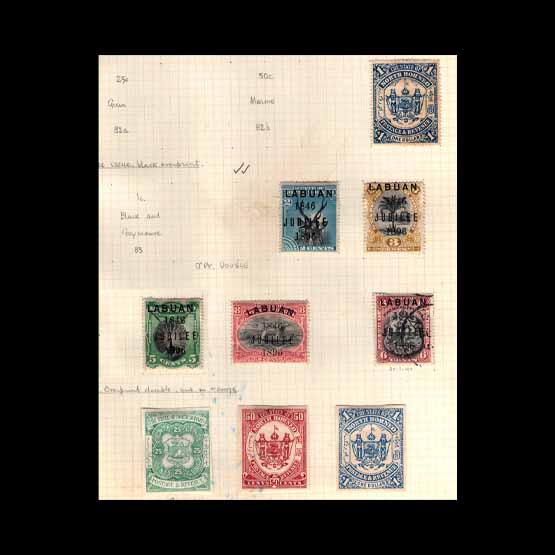 Lot 11088
 Lot 11118
 Lot 11119
Lot 11106
Hong Kong UM
Related lotRelated to Lot 11116 · Same country / area · Block · Mint condition · Similar period
KGVI: Definitive - 1c brown and 1c pale brown in UM blocks of 4. 1c brown lower marginal and gutter at left, folded along vertical perfs between stamps. 1c pale brown SE corner Plate 1 marginal.
Philatelic terms
UM — Unmounted Mint
SG — Stanley Gibbons
SG value — Stanley Gibbons catalogue value
plate — Plate
General philatelic guidance — separate from the UPA catalogue description.