Describe what you collect in ordinary language, or search by country, date, Stanley Gibbons reference, description and classification. A mint stamp with original gum that has not been mounted or hinged. A stamp that has been used, normally evidenced by a postal or fiscal cancellation. The Stanley Gibbons catalogue reference used to identify and catalogue stamps. The catalogue value quoted from Stanley Gibbons. It is not the same as the UPA auction estimate or a guaranteed selling price. Two stamps that remain joined together. A mint stamp with original gum that has not been mounted or hinged. The Stanley Gibbons catalogue reference used to identify and catalogue stamps. The catalogue value quoted from Stanley Gibbons. It is not the same as the UPA auction estimate or a guaranteed selling price. A printing plate, or an identifying plate number or characteristic, associated with the production of a stamp. A joined group of stamps, normally arranged in at least two rows and two columns. A mint stamp with original gum that has not been mounted or hinged. The Stanley Gibbons catalogue reference used to identify and catalogue stamps. The catalogue value quoted from Stanley Gibbons. It is not the same as the UPA auction estimate or a guaranteed selling price. A joined group of stamps, normally arranged in at least two rows and two columns. A mint stamp with original gum that has not been mounted or hinged. The Stanley Gibbons catalogue reference used to identify and catalogue stamps. The catalogue value quoted from Stanley Gibbons. It is not the same as the UPA auction estimate or a guaranteed selling price. An abbreviation for watermark: a design or pattern incorporated into the stamp paper during manufacture. A mint stamp with original gum that has not been mounted or hinged. The Stanley Gibbons catalogue reference used to identify and catalogue stamps. The catalogue value quoted from Stanley Gibbons. It is not the same as the UPA auction estimate or a guaranteed selling price. The rows of holes or cuts between stamps that allow them to be separated; measurements describe the spacing of those perforations. An abbreviation for watermark: a design or pattern incorporated into the stamp paper during manufacture. A mint stamp with original gum that has not been mounted or hinged. The Stanley Gibbons catalogue reference used to identify and catalogue stamps. The catalogue value quoted from Stanley Gibbons. It is not the same as the UPA auction estimate or a guaranteed selling price. A mint stamp with original gum that has not been mounted or hinged. The Stanley Gibbons catalogue reference used to identify and catalogue stamps. The catalogue value quoted from Stanley Gibbons. It is not the same as the UPA auction estimate or a guaranteed selling price. A mint stamp with original gum that has not been mounted or hinged. The Stanley Gibbons catalogue reference used to identify and catalogue stamps. The catalogue value quoted from Stanley Gibbons. It is not the same as the UPA auction estimate or a guaranteed selling price. A mint stamp with original gum that has not been mounted or hinged. The Stanley Gibbons catalogue reference used to identify and catalogue stamps. The catalogue value quoted from Stanley Gibbons. It is not the same as the UPA auction estimate or a guaranteed selling price. A mint stamp with original gum that has not been mounted or hinged. The Stanley Gibbons catalogue reference used to identify and catalogue stamps. The catalogue value quoted from Stanley Gibbons. It is not the same as the UPA auction estimate or a guaranteed selling price. The rows of holes or cuts between stamps that allow them to be separated; measurements describe the spacing of those perforations. An abbreviation for watermark: a design or pattern incorporated into the stamp paper during manufacture. A mint stamp with original gum that has not been mounted or hinged. The Stanley Gibbons catalogue reference used to identify and catalogue stamps. The catalogue value quoted from Stanley Gibbons. It is not the same as the UPA auction estimate or a guaranteed selling price. The rows of holes or cuts between stamps that allow them to be separated; measurements describe the spacing of those perforations. An abbreviation for watermark: a design or pattern incorporated into the stamp paper during manufacture. The Stanley Gibbons catalogue reference used to identify and catalogue stamps. The catalogue value quoted from Stanley Gibbons. It is not the same as the UPA auction estimate or a guaranteed selling price. The Stanley Gibbons catalogue reference used to identify and catalogue stamps. The catalogue value quoted from Stanley Gibbons. It is not the same as the UPA auction estimate or a guaranteed selling price. A stamp that has been used, normally evidenced by a postal or fiscal cancellation. The Stanley Gibbons catalogue reference used to identify and catalogue stamps. The catalogue value quoted from Stanley Gibbons. It is not the same as the UPA auction estimate or a guaranteed selling price. The Stanley Gibbons catalogue reference used to identify and catalogue stamps. The catalogue value quoted from Stanley Gibbons. It is not the same as the UPA auction estimate or a guaranteed selling price. The Stanley Gibbons catalogue reference used to identify and catalogue stamps. The catalogue value quoted from Stanley Gibbons. It is not the same as the UPA auction estimate or a guaranteed selling price. A stamp that has been used, normally evidenced by a postal or fiscal cancellation. The Stanley Gibbons catalogue reference used to identify and catalogue stamps. The catalogue value quoted from Stanley Gibbons. It is not the same as the UPA auction estimate or a guaranteed selling price. The Stanley Gibbons catalogue reference used to identify and catalogue stamps. The catalogue value quoted from Stanley Gibbons. It is not the same as the UPA auction estimate or a guaranteed selling price. A mint stamp showing only light evidence of previous mounting or hinging. The Stanley Gibbons catalogue reference used to identify and catalogue stamps. The catalogue value quoted from Stanley Gibbons. It is not the same as the UPA auction estimate or a guaranteed selling price. A stamp that has been used, normally evidenced by a postal or fiscal cancellation. A printing plate, or an identifying plate number or characteristic, associated with the production of a stamp. The Stanley Gibbons catalogue reference used to identify and catalogue stamps. The catalogue value quoted from Stanley Gibbons. It is not the same as the UPA auction estimate or a guaranteed selling price. The Stanley Gibbons catalogue reference used to identify and catalogue stamps. The catalogue value quoted from Stanley Gibbons. It is not the same as the UPA auction estimate or a guaranteed selling price. A mint stamp showing only light evidence of previous mounting or hinging. The Stanley Gibbons catalogue reference used to identify and catalogue stamps. The catalogue value quoted from Stanley Gibbons. It is not the same as the UPA auction estimate or a guaranteed selling price.
Search the UPA catalogue
 Lot 13187
 Lot 13182
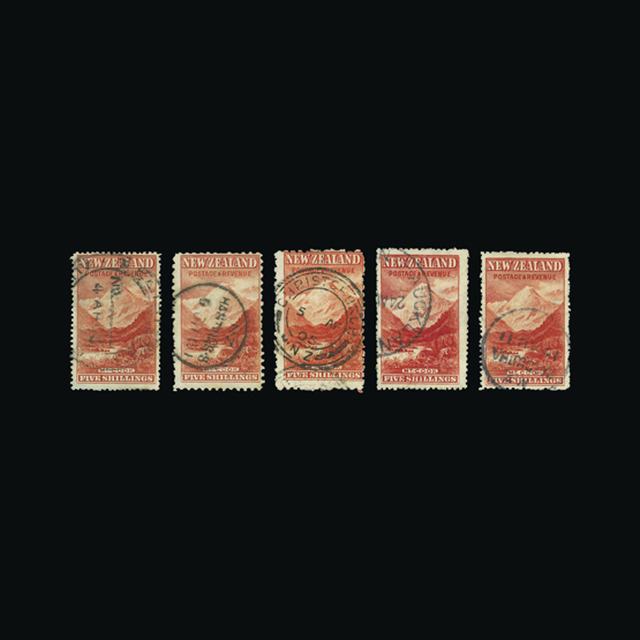 Lot 13183
 Lot 13197
 Lot 13208
 Lot 13219
 Lot 13170
 Lot 13174
 Lot 13175
 Lot 13177
Leeward Islands UM
Related lotRelated to Lot 13200 · Same country / area · Pair · Mint condition · Similar period
GVI large keyplate 10/- bluish green & deep red horiz joined pair (weak perfs) from position 44 & 45 in the sheet. Yendell 'Large Key Type' ref LFF44 'Extensive disturbance to the top right value tablet' and goes on to say only on the 1938, 1942 & 1943 printings (so eliminates ordinary paper printings), Ref HPF45a 'Blunting of the third leaf up at left' & 'Shaved outer edge to left lower scroll'. Faint vertical crease on right unit. U.m. (pair).
Philatelic terms
UM — Unmounted Mint
U — Used
SG — Stanley Gibbons
SG value — Stanley Gibbons catalogue value
pair — Pair
General philatelic guidance — separate from the UPA catalogue description.